Tuesday, September 10, 2024

Global Circuit Monitoring Market Size to experience strong headwind in 2028

According to a latest research, the global circuit monitoring market size is projected to reach USD 829 million by 2028 from an estimated USD 659 million in 2023, at a CAGR of 4.7% during the forecast period. Increasing number of data centers, and rising concern overpower stability for uninterrupted business operation is driving the market for Circuit Monitoring Market.

Key Market Players

The major players in the circuit monitoring market size are ABB (Switzerland), Schneider Electric (France), Eaton (Ireland), Toshiba International Corporation (Japan), and Legrand (Ireland).

Download PDF Brochure - 

https://www.marketsandmarkets.com/pdfdownloadNew.asp?id=196253590

Strong growth from enterprise shift towards cloud applications, and huge investments, along with enforcement of stringent standards, to reduce carbon footprint in data centers . For instance, regulatory bodies and governments, such as the International Organization for Standardization, and American National Standards Institute, are imposing sustainability standards on newly built data center. These are the few major factors driving the circuit monitoring market growth.

This report segments the circuit monitoring industry based on type into two types: Modular circuit monitoring, and others. The others segment is expected to be the second fastest growing market during the forecast period. The others segment include branch circuit monitoring, and multi circuit monitoring. Both multi-circuit monitors and branch circuit monitors are compact and, hence, use lesser space as compared to traditional single-circuit energy meters. These are used by industries, data centers, and commercial and residential end users.

This report segments the market for  circuit monitoring based on end users into four segments: data centers, commercial, industrial, and residential. The data center segment is expected to be the fastest growing segment during the forecast period. The data centers segment is driven by the heightened adoption of circuit monitoring in data centers for remote monitoring and the determination of power usage effectiveness.

Ask Sample Pages of the Report @ 

https://www.marketsandmarkets.com/requestsampleNew.asp?id=196253590

Europe is expected to be the second largest circuit monitoring market during the forecast period. Commercial data center market is expanding at an unprecedented speed across Europe. The UK set Euro 400 million fast-track for government data centers for government offices and commercial sectors, also countries in this region are focusing on developing cloud technology and infrastructure. For instance, Emerson (US) rapidly deployed one of the t-systems' largest modular data centers in Europe to maximize the availability, capacity, and efficiency of critical infrastructure. These factors are expected to fuel the growth of the circuit monitoring market in the region.

About MarketsandMarkets™

MarketsandMarkets™ has been recognized as one of America’s best management consulting firms by Forbes, as per their recent report. 

MarketsandMarkets™ is a blue ocean alternative in growth consulting and program management, leveraging a man-machine offering to drive supernormal growth for progressive organizations in the B2B space. We have the widest lens on emerging technologies, making us proficient in co-creating supernormal growth for clients.

Earlier this year, we made a formal transformation into one of America's best management consulting firms as per a survey conducted by Forbes.

The B2B economy is witnessing the emergence of $25 trillion of new revenue streams that are substituting existing revenue streams in this decade alone. We work with clients on growth programs, helping them monetize this $25 trillion opportunity through our service lines - TAM Expansion, Go-to-Market (GTM) Strategy to Execution, Market Share Gain, Account Enablement, and Thought Leadership Marketing.

Built on the 'GIVE Growth' principle, we work with several Forbes Global 2000 B2B companies - helping them stay relevant in a disruptive ecosystem. Our insights and strategies are molded by our industry experts, cutting-edge AI-powered Market Intelligence Cloud, and years of research. The KnowledgeStore™ (our Market Intelligence Cloud) integrates our research, facilitates an analysis of interconnections through a set of applications, helping clients look at the entire ecosystem and understand the revenue shifts happening in their industry.

Contact:

Mr. Rohan Salgarkar

MarketsandMarkets Inc.

1615 South Congress Ave.

Suite 103, Delray Beach, FL 33445

USA: +1-888-600-6441

Email: newsletter@marketsandmarkets.com

Monday, September 9, 2024

Synchronous Generator Industry Expected to Witness the Highest Growth during 2023-2028

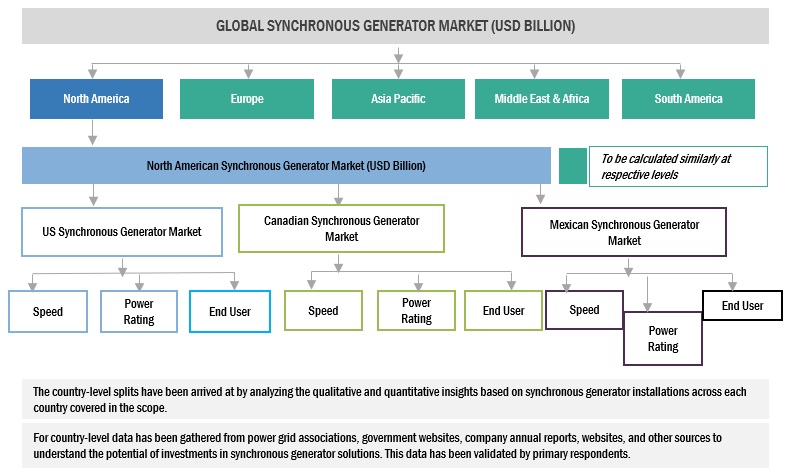
According to a latest research, The Synchronous Generator Industry has experienced robust growth in recent years, expanding from USD 4.7 billion in 2023 to USD 5.9 billion in 2028 at a compound annual growth rate (CAGR) of 4.6%. A synchronous generator, also called an AC generator or alternator, is an electromechanical energy conversion device that converts mechanical energy from sources such as engines and turbines into electrical energy in the form of alternating current (AC). It is called an alternator as it produces alternating current electricity, and a synchronous generator because it is necessarily driven at synchronous speed to generate electricity at the desired frequency.

Strong Future Growth Anticipated

The Synchronous Generator Industry is projected to continue its strong growth, reaching .9 billion in 2028 at a compound annual growth rate (CAGR) of 4.6%. Synchronous generators are essential in power plants for generating electricity on a large scale as they provide grid stability, high efficiency, voltage regulations and synchronization with the grid.

Download PDF Brochure: https://www.marketsandmarkets.com/pdfdownloadNew.asp?id=183822134

The new technological advancements in synchronous generators is virtual synchronous generators (VSGs). Virtual synchronous generators (VSGs) are software-based models of synchronous generators that can be used in power systems to provide inertia and stabilize grid frequency. VSGs use advanced control algorithms to emulate the behavior of traditional synchronous generators, which have been used for decades to provide these grid-stabilizing services. However, VSGs are not physical machines and do not require physical components like rotors or stators. Instead, they can be implemented in power converters connected to renewable energy sources, such as wind turbines and solar panels, enabling these sources to contribute to grid stability in a way that was previously only possible with traditional synchronous generators

Growth Driver Of The Synchronous Generator Industry

The renewable energy segment by end user is expected to be the fastest growing segment of the synchronous generator market. Synchronous generators are widely used in hydroelectric power plants. Water turbines, driven by the force of flowing water or falling water, are coupled to synchronous generators to produce electricity. This setup is commonly used in large-scale hydroelectric projects. They are also frequently employed in wind turbines to convert the mechanical energy from the wind into electrical energy. Synchronous generators offer advantages in renewable power generation, such as stable frequency output, grid synchronization capability, and the ability to provide reactive power for grid stability.

 Synchronous Generator Market Size: Tow-Down Approach

The gas turbine segment by prime mover is projected to be the fastest growing segment of the synchronous generator industry. Gas turbine synchronous generators are known for their high efficiency in converting fuel energy into electricity. They can achieve higher thermal efficiencies compared to other types of generators, such as steam turbines. Gas turbine generators have relatively lower emissions compared to conventional coal-fired power plants. Modern gas turbines employ advanced combustion technologies, such as lean-burn and dry low NOx (DLN) systems, which significantly reduce nitrogen oxide (NOx) emissions.

Make an Inquiry: https://www.marketsandmarkets.com/Enquiry_Before_BuyingNew.asp?id=183822134

The 1,500 RPM segment by speed is projected to be the fastest growing segment of the synchronous generators market. Synchronous generators operating at 1,500 rpm are well-suited for low-speed prime movers such as slow-speed diesel engines or certain types of industrial turbines. These generators can be directly coupled with such prime movers without the need for additional gearing or speed control mechanisms, simplifying the system design and reducing maintenance requirements. Their smaller size and reduced weight result in lower material and manufacturing costs. Additionally, the use of low-speed prime movers, which are often more cost-effective than high-speed engines or turbines, contributes to overall cost savings.

In 2022, the Asia Pacific dominated the global synchronous generator industry, followed by North America & Europe. The region, by country, has been segmented into the China, India, Japan, Australia, South Korea, and Rest of Asia Pacific. China has been actively investing in wind farms and hydroelectric projects, which require synchronous generators for power generation. Additionally, China’s continuous industrialization and urbanization have increased electricity demand, driving the need for synchronous generators in various industries. India has a rapidly growing economy and a rising population, leading to increased energy demand. The country requires reliable and efficient power generation technologies, including steam and gas turbines, to meet this demand. India has been promoting the use of natural gas as a cleaner alternative to coal. This has led to the construction of gas-based power plants, where gas turbines synchronous generators play a crucial role. Japan has a diversified energy mix that includes both conventional and renewable sources. While the country aims to increase its share of renewable energy, it still heavily relies on thermal power generation, where steam and gas turbines are essential.

Request Sample Pages of the Report: https://www.marketsandmarkets.com/requestsampleNew.asp?id=183822134

Major players operating in the synchronous generator industry include ABB (Switzerland), WEG (Brazil), Siemens Energy (Germany), Meidensha Corporation (Japan),  and Andritz (Austria). These companies have reliable manufacturing facilities as well as strong distribution  networks across key regions, such as North America, Europe, and Asia Pacific. They have an established portfolio of reputable products and services, a robust market presence, and strong business strategies. Furthermore, these companies have a significant market share, products with wider applications, broader  geographical use cases, and a larger product footprint.

About MarketsandMarkets™

MarketsandMarkets™ has been recognized as one of America’s best management consulting firms by Forbes, as per their recent report.

MarketsandMarkets™ is a blue ocean alternative in growth consulting and program management, leveraging a man-machine offering to drive supernormal growth for progressive organizations in the B2B space. We have the widest lens on emerging technologies, making us proficient in co-creating supernormal growth for clients.

Earlier this year, we made a formal transformation into one of America's best management consulting firms as per a survey conducted by Forbes.

The B2B economy is witnessing the emergence of trillion of new revenue streams that are substituting existing revenue streams in this decade alone. We work with clients on growth programs, helping them monetize this trillion opportunity through our service lines - TAM Expansion, Go-to-Market (GTM) Strategy to Execution, Market Share Gain, Account Enablement, and Thought Leadership Marketing.

Built on the 'GIVE Growth' principle, we work with several Forbes Global 2000 B2B companies - helping them stay relevant in a disruptive ecosystem. Our insights and strategies are molded by our industry experts, cutting-edge AI-powered Market Intelligence Cloud, and years of research. The KnowledgeStore™ (our Market Intelligence Cloud) integrates our research, facilitates an analysis of interconnections through a set of applications, helping clients look at the entire ecosystem and understand the revenue shifts happening in their industry.

Contact:
Mr. Rohan Salgarkar
MarketsandMarkets Inc.
1615 South Congress Ave.
Suite 103, Delray Beach, FL 33445
USA: +1-888-600-6441
Email: newsletter@marketsandmarkets.com

Friday, September 6, 2024

Lithium Iron Phosphate Batteries Industry - Analyzing the Growth Drivers and Upcoming Trends

The global lithium iron phosphate batteries market is projected to reach USD 35.5 billion by 2028 from an estimated USD 17.7 billion in 2023, at a CAGR of 14.9% during the forecast period. The growing investments in building offshore wind farms will positively impact the lithium iron phosphate batteries market.

A lithium iron phosphate (LiFePO4) battery is a type of lithium-ion battery that charges and discharges at high speed. It uses lithium iron phosphate as the cathode and graphite as the anode. favorable government policies and the rapid development of EV charging infrastructure are consequently boosting the demand for LFP batteries.

Download PDF Brochure - https://www.marketsandmarkets.com/pdfdownloadNew.asp?id=77659282

This report segments the lithium iron phosphate batteries market based on industry into: automotive, power, industrial, consumer electronic, aerospace, marine and others(telecommunication and medical). Industrial segment are expected to be the second largest market during the forecast period. The industrial segment primarily includes forklifts, mining equipments and construction equipments. This segment has a huge demand for equipment and tools for aiding smooth operations. The manufacturers of construction and mining equipment emphasize two major factors—environmental safety and durability. Hence, they are shifting to battery-based technology. Construction equipment include cutting machines, material handling vehicles, and pulley cranes. On the other hand, mining equipment include underground mobile equipment, LED flashlights, and remote haul trucks.

This report segments the lithium iron phosphate batteries market based on application into two categories: portable and stationary. The stationary segment is expected to be the second-largest segment during the forecast period. Stationary applications include power and industrial sectors. The demand for lithium iron phosphate batteries from the power sector refers to the battery-operated grid energy storage systems. Lithium iron phosphate batteries are considered most suitable for energy storage technology because of their declining cost, higher safety, and longer life cycle.

Key Market Players -

    BYD Company Ltd. (China),

    Contemporary Amperex Technology Co., Limited. (China),

    Gotion, Inc. (US),

    CALB (China),

    A123 Systems LLC (US) among others..

Request FREE Sample Pages of the Report @ https://www.marketsandmarkets.com/requestsampleNew.asp?id=77659282

Asia Pacific is expected to be the largest region in the lithium iron phosphate batteries market

Asia Pacific is expected to be the largest lithium iron phosphate batteries market during the forecast period. The Asia Pacific region, comprising major economies such as China, India, Japan, South Korea, and the Rest of Asia Pacific, which have a huge potential for several application areas within the lithium iron phosphate. In recent years, this region has emerged as a hub for automobile production. Recent infrastructure developments and industrialization activities in emerging nations have opened new avenues and opportunities for OEMs. Additionally, the increasing purchasing power of the population has stimulated the demand for automobiles, which would be a driving force for the growth of the lithium iron phosphate batteries market. Asia-Pacific region has a significant presence in the lithium-ion battery industry, both in terms of battery production and demand. Countries, particularly China, South Korea, and Japan, are major manufacturers of lithium-ion batteries. These countries have a well-established battery industry, with large-scale production facilities operated by companies such as BYD Company Ltd, CATL, CALB, LG Chem, and few other key players. They produce batteries for a wide range of applications, including electric vehicles, consumer electronics, and energy storage systems.

Thursday, September 5, 2024

Small Modular Reactor Market Size Poised for Growth: Emerging Trends and Key Opportunities in 2030

The global small modular reactor market size is estimated to be USD 5.8 billion in 2023 and is projected to reach USD 6.8 billion by 2030, at a CAGR of 2.3% during the forecast period. Factors such as the versatile nature of nuclear power and the relative advantages of SMRs such as modularization and factory construction are enabling the growth of the market.

"Small modular reactors (SMRS) are defined as nuclear reactors generally 300 MWe equivalent or less, designed with modular technology using module factory fabrication, pursuing economies of series production and short construction times," according to the World Nuclear Association. The ability of SMRS to meet the requirements of flexible power generation for a wide range of applications, such as power generation, process heating, desalination, hydrogen production, industrial applications, and replacing ageing fossil fuel fired power plants, has increased demand for them.

Download PDF Brochure @ https://www.marketsandmarkets.com/pdfdownloadNew.asp?id=5001546

In 2022, the Asia Pacific dominated the global small modular reactor market, followed by Europe and Americas. The region, by country, has been segmented into the China, Japan, India, South Korea, and the Rest of Asia Pacific.  Due to the enormous number of SMR projects in China, Asia Pacific is a big contributor to the small modular reactor industry in the current environment. SMRs have the potential to replace coal- and other fossil-fuel-fired power stations in the region for power production and process heat applications, which will likely promote the expansion of the regional small modular reactor market.

The upto 100 MW segment by power rating is expected to be the third-largest growing segment of the small modular reactor market. The reactor unit can be built in a factory and delivered to the site of installation. Because of the modular construction, many SMR units can be deployed together to satisfy varied energy demands. A 100 MW SMR's major use is electricity generating. It may function as a stand-alone power plant, supplying clean and dependable electricity to cities, industries, and isolated regions. The excess heat generated by a 100 MW SMR can be used for district heating, which involves distributing thermal energy to surrounding residential, commercial, and institutional buildings for space heating and water heating.

Make an Inquiry @ https://www.marketsandmarkets.com/Enquiry_Before_BuyingNew.asp?id=5001546

The gases segment by coolant is projected to be the fastest growing segment of the small modular reactor market. During operation, the gas-cooled reactor uses helium as a coolant medium, allowing it to be easily pressurized and maintain a stable high temperature, allowing for greater operational efficiency. Using gas as a medium in the reactor can prevent corrosion on the reactor's surfaces, reducing the need for maintenance. These operational advantages are propelling the gases segment forward. Graphite is used as a neutron moderator in gas-cooled reactors, and carbon dioxide gas is used as a coolant.

The light-water reactors segment by type is projected to be the fastest growing segment of the small modular reactor market. In 2022, the light water reactor category accounted for 40.6% of the small modular reactor market. These reactors, which use common water as a coolant, are the most widely used since they pose the fewest technological dangers. SMR designs based on LWR technology are similar to large-scale LWRs in use today. Such SMRS employ well-tested technologies and products with small and integrated components and higher passive safety measures over current big scale LWRS. Light-water SMRS have a better level of technological readiness than other SMB designs. Because traditional LWR technology is well-developed, these reactors provide fewer hurdles to present licencing processes. Most regulators are familiar with the technology, resulting in a relatively short learning curve for both regulatory bodies and designers in light water reactors. In the case of a Pressurised Water Reactor (PWR), this is done after the safety rods have been lowered and unlatched.

The hydrogen generation segment by application is projected to be the forth-largest growing segment of the small modular reactor market. Hydrogen is essential in a variety of industrial applications. It can help with the decarbonization of electricity and transportation by being used for energy storage or as a fuel for hydrogen fuel-cell cars, trains, ships, and aeroplanes. Hydrogen can be produced using the fast neutron reactor, molten salt reactor, and high-temperature reactor technologies. The type of reactor technology influences the choice of hydrogen technologies to be combined with the SMRS. Only electricity is required for a few hydrogen manufacturing systems, such as traditional electrolysis. In contrast, methods such as thermochemical cycles may just require process heat, whereas hybrid technologies, such as high-temperature steam electrolysis (HTSE) and hybrid thermochemical cycles, require both heat and electricity.

Ask FREE Sample Pages of the Report @ https://www.marketsandmarkets.com/requestsampleNew.asp?id=5001546

Europe is expected to grow at the second-highest CAGR during the forecast period. Russia, the United Kingdom, France, and the rest of Europe are all considered in the European small modular reactor market. Italy, Luxembourg, Denmark, the Czech Republic, Sweden, Ukraine, Finland, Estonia, Poland, and Romania are included in the rest of Europe. Nuclear energy accounts for around 28.4% of the region's electricity generation mix, according to the BP Statistical Review of World Energy 2022. The region was responsible for 30.2% of global nuclear power usage. Investments in SMRS development, as well as a trend towards the usage of clean energy to address climate change, are expanding the potential for SMRS deployment in this region. For instance, the government dedicated USD 298 million to SMRS in 2021 as part of the UK Research and Innovation (UKRI) Low-Cost Nuclear (LCN) programme in November 2020. UKRI offered an initial match financing of USD 23 million to the UK SMR consortium lead by Rolls-Royce in November 2019 for the development of a conceptual SMR design. Rosatom (Russia) announced intentions to invest USD 7 billion in new nuclear technology by 2030 in June 2021.

About MarketsandMarkets™

MarketsandMarkets™ has been recognized as one of America’s best management consulting firms by Forbes, as per their recent report. 

MarketsandMarkets™ is a blue ocean alternative in growth consulting and program management, leveraging a man-machine offering to drive supernormal growth for progressive organizations in the B2B space. We have the widest lens on emerging technologies, making us proficient in co-creating supernormal growth for clients.

Earlier this year, we made a formal transformation into one of America's best management consulting firms as per a survey conducted by Forbes.

The B2B economy is witnessing the emergence of $25 trillion of new revenue streams that are substituting existing revenue streams in this decade alone. We work with clients on growth programs, helping them monetize this $25 trillion opportunity through our service lines - TAM Expansion, Go-to-Market (GTM) Strategy to Execution, Market Share Gain, Account Enablement, and Thought Leadership Marketing.

Contact:

Mr. Rohan Salgarkar

MarketsandMarkets Inc.

1615 South Congress Ave.

Suite 103, Delray Beach, FL 33445

USA: +1-888-600-6441

Email: newsletter@marketsandmarkets.com
Wednesday, September 4, 2024

High Voltage Cables and Accessories Market to Witness A Phenomenal Growth by 2028

According to a research report, the high voltage cables and accessories industry is projected to reach USD 52.5 billion by 2028 from an estimated USD 40.0 billion in 2023, at a CAGR of 5.6% during the forecast period.

High voltage cables and accessories are essential as they facilitate the efficient and reliable transfer of electricity from power plants to power utilities, renewables and industries over long distances. It offer insulation and protection to prevent electrical leakage and reduce power losses. Accessories are essential components utilized to establish secure connections and maintain the seamless flow of power, ensuring the integrity of the system.​

Download PDF Brochure - https://www.marketsandmarkets.com/pdfdownloadNew.asp?id=95892251

The power utilities, by end user, is expected to grow be the largest segment during the forecast period.

Based on end user, the market has been split into power utilities, renewables, and indusrials. The power utilities segment is anticipated to be the largest during the forecast period. Power utilities industry is growing in high voltage cables and accessories market because of rising demand for electricity due to industrialization, urbanization, population growth etc. It is also growing due to factors like renewable energy integration, grid modernization, infrastructure expansion, and advancements in cable technology.

This research report categorizes the high voltage cables and accessories industry by component, power source, application, and region.

On the basis of by product type:
  • Cables
    • XLPE Cables (Cross-linked Polyethylene)
    • EPR Cables (Ethylene-Propylene Rubber)
    • HEPR Cables (High Modulus Ethylene-Propylene)
    • MI Cables (Mass Impregnated)
  • Accessories
    • Cable Joints
    • Cable Terminations
    • Fittings & Fixtures
    • Others
On the basis of voltage:
  • 72.5 kV
  • 123 kV
  • 145 kV
  • 170 kV
  • 245 kV
  • 400 kV and above
On the basis of installation:
  • Overhead
  • Underground
  • Submarine
On the basis of conductor type:
  • Copper
  • Aluminum
On the basis of end user:
  • Power Utilities  
  • Renewables      
  • Industrial
    • Oil & Gas
    • Chemicals & Petrochemicals
    • Metals & Mining
    • Others
On the basis of region:
  • Asia Pacific
  • Europe
  • North America
  • Middle East & Africa
  • South America

The underground segment, by installation, is expected to grow at the second-highest CAGR during the forecast period.

This report segments the high voltage cables and accessories market based on installation into three segments: overhead, underground, and submarine. The underground segment is expected to be the second-fastest growing segment during the forecast period. Underground installation is essential as it offers enhanced reliability as they are less susceptible to weather-related disruptions leading to fewer power outages and a more dependable electrical supply. Underground cables provide flexibility for future expansion and urban planning, allowing for easier integration with new infrastructure projects and accommodating growing power demands.

Ask FREE Sample Pages of the Report - https://www.marketsandmarkets.com/requestsampleNew.asp?id=95892251

Asia Pacific is expected to be the largest region in the market

Asia Pacific is expected to be the largest high voltage cables and accessories industry during the forecast period. Industries in Asia Pacific is constantly evolving, with new developments and emerging trends emerging. Some key trends such as the growth in the energy consumption of the region, coupled with development of infrastructure and energy projects drive the market for high voltage cables and accessories with the rising need for effective power transmission and distribution.

Tuesday, September 3, 2024

Centrifugal Pump Industry to Penetrate Untapped Regions During 2023 – 2028

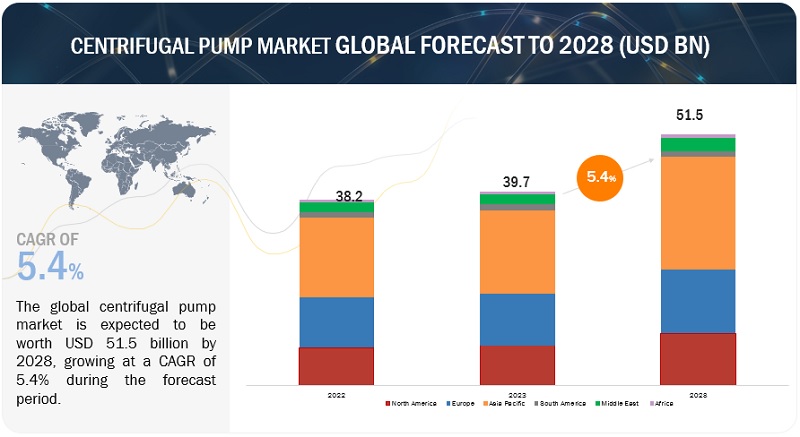
The global centrifugal pump industry is estimated to grow from USD 39.7 billion in 2023 to USD 51.5 billion by 2028, at a CAGR of 5.4% during the forecast period. The requirement for desalination and water treatment has also contributed to the growth opportunities for centrifugal pump manufacturers. Desalination plants rely on centrifugal pumps for seawater intake, brine circulation, and product water transfer. As water scarcity becomes a pressing issue in many regions, the demand for desalination and water treatment solutions is rising, thereby driving the demand for centrifugal pumps in industrial sector.

Key Market Players

Xylem Inc. (US), Sulzer (Switzerland), KSB (Germany), Grundfos Holding A/S (Denmark), and Flowserve Corporation (US) are some of the prominent companies in this market.

Download PDF Brochure:

https://www.marketsandmarkets.com/pdfdownloadNew.asp?id=17494785

Based on type, the market has been categorized into overhung impeller, between bearing, and vertically suspended. The market is dominated by overhung impeller type of centrifugal pumps. One common application of overhung impeller centrifugal pumps is in water supply systems for residential and commercial settings. Their compact design makes them a preferred choice in these environments where space is limited. As a result, the overhung impeller segment is projected to dominate the centrifugal pump market during the forecast period, driven by their increased usage in industrial and commercial applications. 

Based on operation type, the market has been categorized into below electrical, hydraulic, and air-driven. Within the oil and gas industry, centrifugal pumps serve crucial roles in various applications. They are utilized for main oil line transfer, seawater lifting, effluent treatment, boiler feeds, and more. When it comes to artificial lifts carrying moderate to high fluids from wellbores, electrical centrifugal pumps prove to be efficient and reliable. One significant advantage of these pumps is their ability to prevent the formation of vapor cavities in liquids. They find application in both open-pit and bore well scenarios.

This report segments the centrifugal pump industry based on end user into Based on end user, the centrifugal pump market has been classified into industrial, and residential & commercial. The industrial segment has been further segmented into oil and gas, water and wastewater, mining and metal chemicals, power generation, pharmaceuticals, food & beverage, pulp and paper, agriculture, automotive, and textiles. The industrial segment holds the largest market share of the centrifugal pump market. Centrifugal pumps can handle any kind of debris (stones, sticks, sand, mud, or trash) that can fit through the opening. These are used in feeding filter presses, digestion tanks & thickeners, and pumping stations. They are also used in dosing applications in wastewater treatment processes. The demand for centrifugal pumps in the mining and metals industry is being driven by new infrastructure development projects taking place across the fast-growing economies of Asia Pacific. Such initiatives propel the growth of the centrifugal pump market for the mining and metals industry.  

Asia Pacific is the fastest-growing region in the centrifugal pump industry. The rising population and resulting increase in electricity demand are anticipated to fuel market growth. The industrial sector has fueled the demand for additional power and is anticipated to expand the market for centrifugal pumps in the power generation industry in the region.

Request Sample Pages of the Report: https://www.marketsandmarkets.com/requestsampleNew.asp?id=17494785

 The key players in the market include Grundfos Holding A/S (Denmark), Xylem Inc. (US), KSB (Germany), Sulzer (Switzerland), and Flowserve Corporation (US). Strategies such as product launches, partnerships, collaboration, acquisitions, and contracts increase their share in the market. Companies are focussing on manufacturing solar powered centrifugal pumps a new range of pump wherein the pumps utilize solar energy to pump water for irrigation purposes, offering numerous advantages over traditional fuel-based pumps. Farmers can save on fuel expenses and eliminate the dependence on unreliable power grids, making solar water pumps a financially viable and sustainable solution. Furthermore, solar water pumps are environmentally friendly. They produce clean energy, reducing carbon emissions and minimizing the ecological footprint of agricultural activities.

Contact:

Mr. Rohan Salgarkar

MarketsandMarkets Inc.

1615 South Congress Ave.

Suite 103, Delray Beach, FL 33445

USA: +1-888-600-6441

Email: newsletter@marketsandmarkets.com
Monday, September 2, 2024

Recycling Water Filtration Market Outlook 2023 – Huge Growth, Trends, Revenue And In-Depth Analysis 2028

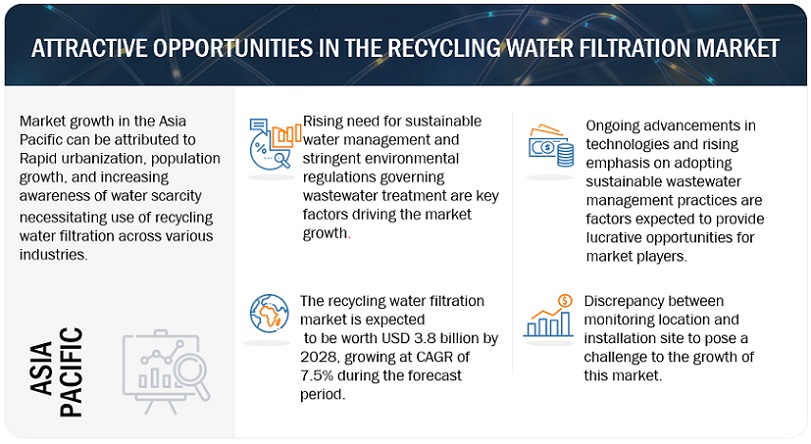
The Recycling water Filtration Market is projected to reach USD 3.8 billion by 2028 from an estimated USD 2.7 billion in 2023, at a CAGR of 7.5% during the forecast period. Recycling water filtration refers to the process of treating used water and filtering it to a quality suitable for reuse. This can be done for a variety of purposes, including potable and non-potable water and environmental restoration. It encompasses the technologies and equipment involved in purifying used water for reuse in various applications. It plays a critical role in water sustainability and conservation by turning wastewater into a valuable resource. Recycling water filtration tackles the challenge of water scarcity by treating wastewater from diverse sectors like oil and gas, food and beverage, farms, and power generation for reuse.

Download PDF Brochure: https://www.marketsandmarkets.com/pdfdownloadNew.asp?id=103943267

Some key trends in the Recycling water Filtration Market include a growing emphasis on advanced filtration technologies, increased adoption of decentralized water treatment systems, rising demand for smart and sustainable solutions, integration of Automation and AI for efficient monitoring and management, and a focus on circular economy principles to enhance water sustainability.

This report segments the Recycling water Filtration Market based on product type into sand filters, multimedia filters, activated carbon filters, and membrane filters. The multimedia filter segment is the second largest segment in the market, based on the product type. Multimedia filters typically include anthracite, sand, and garnet due to their varying densities. In contrast to conventional sand filters that rely on a single media type, multimedia filters leverage a multi-layered design to enhance particle removal efficiency. The growing demand for multimedia filters in the market is driven by their effectiveness in removing various contaminants, adaptability to diverse water sources, and increasing awareness of the importance of comprehensive water treatment for sustainable and clean water initiatives.

This report segments the recycling water filtration market based on membrane type into reverse osmosis membranes, ultrafiltration membranes, microfiltration membranes, and nanofiltration membranes. The reverse osmosis (RO) membrane type is the fastest-growing segment and is experiencing a significant surge in demand within the recycling water filtration market. Reverse osmosis membranes boast exceptional capabilities to remove a wide range of contaminants, including salts, minerals, dissolved organics, and even certain microorganisms, resulting in high-quality recycled water suitable for diverse. These membranes offer efficient filtration with lower energy consumption compared to some alternatives, reducing operational costs and environmental impact. They also create multi-stage systems that deliver superior water quality and address diverse treatment needs.

Ask Sample Pages of the Report: https://www.marketsandmarkets.com/requestsampleNew.asp?id=103943267

The evolving landscape of water treatment technologies presents a significant opportunity for the recycling water filtration market to thrive and expand its impact on sustainable water management. With developments such as nanotechnology, photocatalytic water purification technology, and automated variable filtration technology, the market for recycling water filtration is poised for substantial growth. Developing high-performance membranes, that reduce replacement rates of the filters, opens avenues for more efficient and cost-effective water treatment processes. Furthermore, the driving need for digitalization and predictive maintenance of the filtration products used in water recycling, is anticipated to propel the market growth.

Browse Related Reports:

Produced Water Treatment Market by Application (Onshore, Offshore), Source (Conventional, Unconventional), Treatment (Primary treatment, Secondary treatment, Tertiary treatment) and Region - Global Forecast to 2029

Contact:
Mr. Rohan Salgarkar
MarketsandMarkets Inc.
1615 South Congress Ave.
Suite 103, Delray Beach, FL 33445
USA: +1-888-600-6441
Email: newsletter@marketsandmarkets.com

Waste Management Market Major Developments and Competition Landscape by 2029

The Global   Waste Management Market   is projected to reach USD 1598.1 billion by 2029 from an estimated USD 1219.6 billion in 2024, at a C...